Blog Article
Business Loan Types Compared: Term Loans vs. MCA vs. Line of Credit
Confused by business loan options? Compare term loans, merchant cash advances (MCA), and lines of credit to find the best funding for your small business needs.
Business Loan Types Compared: Term Loans vs. MCA vs. Line of Credit
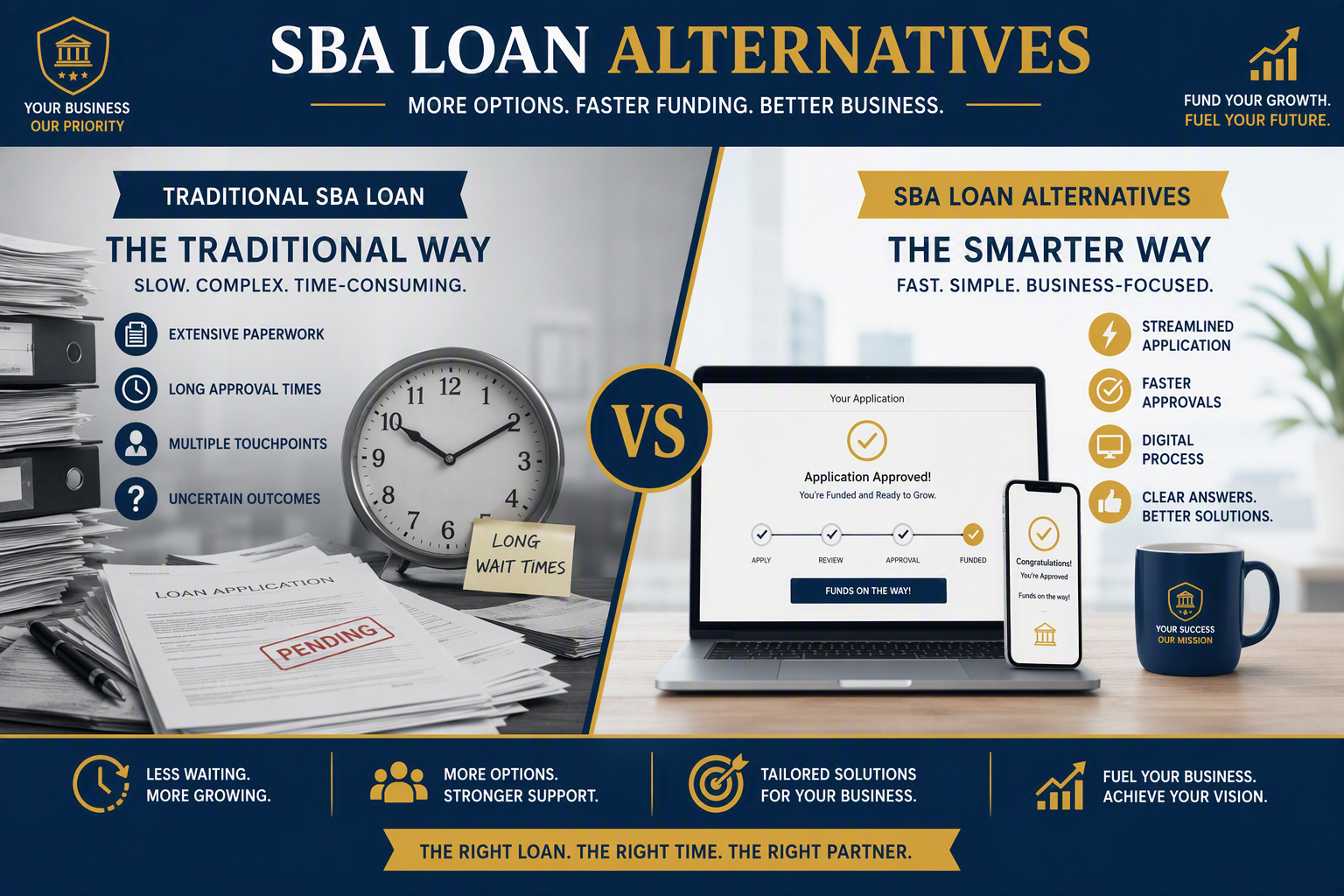
Navigating the landscape of small business funding can feel like a complex maze, especially when your business needs capital fast. With numerous options available, understanding the differences between common financial products like traditional term loans, revolving lines of credit, and merchant cash advances is crucial for making an informed decision. Many small business owners and startup founders are looking for accessible, no-collateral business loans that come with minimal paperwork, and knowing which product aligns with these needs can save significant time and stress.
This comprehensive guide will break down these three primary business loan types, comparing their structures, benefits, drawbacks, and ideal use cases. Our goal is to empower you to choose the funding solution that best supports your business's growth and operational needs. Whether you're a restaurant owner needing quick inventory cash, a construction company eyeing new equipment, or a startup looking for a working capital loan, understanding these distinctions is your first step toward securing the right financial partner.
At Prime Quick Capital, we understand the urgency and nuances of securing capital. As a private broker, not a lender, we specialize in connecting small businesses with fast funding solutions that require minimal documentation and often no collateral. We're here to simplify your funding journey, offering transparent insights into options like the flexible Business Line of Credit & Revolving Funding: Flexible Capital for Growth and other quick capital avenues.
Navigating Your Funding Options: A Business Loan Comparison
For any growing enterprise, whether it's an established retail store or a promising new startup, access to capital is the lifeblood of operations and expansion. However, the sheer volume of business loans for small businesses can be overwhelming. Each funding method comes with its own set of rules, repayment structures, and suitability for different business scenarios. Without a clear understanding, businesses might opt for a loan that doesn't quite fit their financial rhythm, leading to unnecessary costs or missed opportunities.
This section lays the groundwork by introducing the fundamental differences between these options. We'll examine how each type of financing is structured and for what kinds of business needs they are generally best suited. While some traditional lenders might present a limited view, our aim is to provide a holistic perspective that considers speed, flexibility, and eligibility, particularly for those seeking alternatives to conventional banking. By comparing term loans, lines of credit, and merchant cash advances side-by-side, you'll gain a clearer picture of which path could be most beneficial for your specific financial goals.
Understanding these comparisons is not just about finding any money; it's about finding the right money. The ideal choice will support your cash flow, facilitate growth, and integrate seamlessly with your business model without adding undue financial strain.
Demystifying Common Business Funding: Term Loans, Lines of Credit, & Merchant Cash Advances
Let's dive into the specifics of the most common business funding products that small businesses and startups frequently encounter. Each has distinct characteristics that make it suitable for particular situations.
Traditional Term Loans: Predictable Payments for Specific Needs
A traditional term loan is perhaps the most straightforward and recognizable form of financing. When a business takes out a term loan, they receive a lump sum of money upfront and agree to repay it over a set period, or "term," with fixed, regular payments (usually monthly or weekly). These payments typically include both principal and interest.
- Pros: Term loans offer predictability with their fixed repayment schedules, making budgeting easier. They often come with lower interest rates compared to more flexible or faster funding options, especially for well-established businesses with strong credit. They are ideal for significant, planned investments.
- Cons: Eligibility requirements for term loans can be stringent, often requiring a strong credit history, significant time in business, and sometimes collateral. The approval process can also be slower than alternative funding methods.
- Use Cases: Best for one-time, larger investments like purchasing new equipment, expanding a physical location, acquiring another business, or refinancing existing debt. For example, a construction business might use a term loan to buy a new excavator.
Revolving Business Lines of Credit: Flexible Capital for Ongoing Needs
A business line of credit functions much like a credit card, but typically for larger amounts and often with lower interest rates. Businesses are approved for a maximum credit limit, and they can draw funds from this limit as needed. As funds are repaid, they become available to borrow again, making it a "revolving" credit facility. Interest is only paid on the amount currently drawn.
- Pros: The primary advantage of a business line of credit is its unparalleled flexibility. It's an excellent tool for managing irregular cash flow, covering unexpected expenses, or capitalizing on short-term opportunities without committing to a large, fixed loan. You only pay for what you use, and funds are readily accessible once the line is established.
- Cons: Interest rates can sometimes be variable, and depending on the lender, an annual fee or draw fee might apply. While more flexible than term loans, establishing a line of credit often still requires a decent credit profile and business history.
- Use Cases: Perfect for short-term working capital needs, bridging gaps in accounts receivable, purchasing inventory, managing payroll fluctuations, or covering seasonal operational costs. A restaurant owner might use it to stock up before a busy holiday season.
Merchant Cash Advances (MCA): Fast Funding Tied to Future Sales
A merchant cash advance (MCA) is a non-loan financial product where a business receives a lump sum in exchange for a percentage of its future credit and debit card sales. Repayment is made automatically from daily credit card receipts until the agreed-upon amount (the advance plus a "factor rate" fee) is fully repaid.
- Pros: MCAs are known for their speed and accessibility. They often have less stringent credit requirements and can be approved and funded very quickly – sometimes even within the same day. Since repayment is tied to sales, payments naturally adjust to your business's revenue flow; on slower days, less is repaid. This makes them a strong option for businesses with inconsistent or seasonal sales cycles but a high volume of card transactions.
- Cons: While convenient, MCAs can be one of the more expensive forms of funding when calculated as an equivalent Annual Percentage Rate (APR), due to the factor rate and short repayment periods. They are not regulated as traditional loans, so terms can vary widely.
- Use Cases: Ideal for businesses needing very fast cash for urgent needs, such as emergency equipment repairs, quick inventory purchases, or covering immediate payroll. Retail stores, restaurants, and other businesses with high credit card transaction volumes often utilize MCAs for rapid capital.
Choosing the Best Business Loan for Your Needs
Deciding which type of business funding is right for you involves carefully evaluating your business's specific situation and financial goals. There's no one-size-fits-all answer, but by considering key factors, you can align with the best option.
Purpose of Funds: What do you need the money for?
- Large, planned investments (e.g., equipment, real estate, major expansion): A term loan is often the most cost-effective solution due to its typically lower interest rates and structured repayment.
- Ongoing cash flow management, inventory, payroll, or unexpected expenses: A revolving business line of credit provides the flexibility to draw funds as needed and repay them to replenish your available credit.
- Urgent, short-term capital needs tied to sales fluctuations or emergencies: A merchant cash advance can provide rapid access to funds, especially if your business has consistent credit card sales.
Repayment Structure Preference:
- Fixed and predictable: A term loan offers consistent monthly payments, simplifying budgeting.
- Flexible, tied to usage: A line of credit allows you to pay interest only on what you borrow, offering greater control.
- Tied to daily sales: An MCA's repayment automatically adjusts with your sales volume, which can be a relief during slow periods but may feel less transparent than fixed payments.
Speed of Funding: How quickly do you need the capital?
- Very fast (days, sometimes hours): Merchant cash advances are typically the quickest to fund.
- Fast (within a week): Many lines of credit and some specialized term loans can be approved rapidly, especially through brokers like Prime Quick Capital.
- Standard (weeks to months): Traditional bank term loans can take longer.
Creditworthiness and Time in Business:
- Excellent credit and established history: You'll have the widest range of options, including competitive term loans and lines of credit.
- Fair or less-than-perfect credit, or a newer business/startup: Options like MCAs or specialized bad credit business loans through brokers are often more accessible. Prime Quick Capital specializes in helping businesses secure funding even with imperfect credit, by connecting you with diverse lenders.
Cost of Capital:
- While term loans often have lower APRs, lines of credit charge interest only on drawn amounts, and MCAs use a factor rate. It's crucial to understand the effective cost of each to your business over the repayment period. Don't just look at interest rates; consider all fees and the total repayment amount.
Collateral Requirements:
- Traditional term loans sometimes require collateral. However, many modern business funding solutions, including those brokered by Prime Quick Capital, offer options with no collateral required. This can be a significant advantage for startups and small businesses without substantial assets to pledge.
By carefully weighing these factors against your unique business profile, you can confidently navigate the various offerings and identify the most suitable financial product.
Prime Quick Capital: Simplifying Your Funding Decision
Choosing the right business loan can be complex, but it doesn't have to be a solo journey. At Prime Quick Capital, we pride ourselves on being your strategic partner in securing the capital your business needs to thrive. We understand the challenges small business owners face, from unexpected expenses to ambitious growth plans, and we are dedicated to providing clear, efficient pathways to funding.
As a private broker, we are not a direct lender. This distinction is crucial because it means we work for you. We leverage our extensive network of lenders to find the best possible business loans for small businesses and startups, tailored to your specific situation, even if you're looking for solutions with minimal documentation or require fast approval. Our process is designed for speed and convenience: expect fast approval within one week, minimal paperwork, and the ease of electronic signing. We specialize in solutions where no collateral is required, making capital more accessible.
Whether you're exploring a business line of credit to manage cash flow, considering a merchant cash advance for quick capital, or seeking a traditional business loan, we streamline the application process. We also offer solutions for startup loans up to $150K and our "Independence Bankroll" Revolving Line of Credit up to $3M+. Our goal is to empower you with choices and guide you to the funding that truly fuels your success.
Ready to explore your options and secure the capital your business deserves? Apply Now to get started with our quick and easy application, or Book a Free Consultation to speak with one of our funding experts.
Frequently Asked Questions
Q: Can I get a business loan if my business is new or I have bad credit?
A: Yes, absolutely. While traditional banks often have strict requirements, Prime Quick Capital specializes in connecting businesses, including startups and those with less-than-perfect credit, to alternative funding solutions. Options like merchant cash advances or specialized bad credit business loans are often available, focusing more on your business's revenue or potential.
Q: How quickly can I get approved and funded for a business loan?
A: Our process is designed for speed. Many of our funding solutions, particularly merchant cash advances and certain lines of credit, can see approval within days, sometimes even hours, with funds disbursed within one week. We prioritize getting you the capital you need, fast.
Q: What documentation is typically required for these types of business loans?
A: One of Prime Quick Capital's key value propositions is minimal paperwork. While requirements vary by lender and loan type, we generally need basic business information, bank statements, and potentially credit card processing statements for MCAs. Our electronic signing process further simplifies everything.
Q: Is a merchant cash advance truly a loan?
A: Technically, a merchant cash advance (MCA) is not a loan but rather a purchase of future receivables. This distinction means it is often less regulated than traditional loans and has a different repayment structure, typically a percentage of your daily credit card sales, rather than a fixed interest rate.
Q: Do I need collateral to secure funding through Prime Quick Capital?
A: While some traditional loans require collateral, a significant advantage of working with Prime Quick Capital is our access to a wide range of funding solutions that require no collateral. We understand that many small businesses and startups may not have significant assets to pledge, and we work to find options that fit your situation.
Conclusion
Understanding the distinct characteristics of term loans, revolving lines of credit, and merchant cash advances is paramount for any small business owner navigating the world of financing. Each option serves different purposes and comes with unique benefits and considerations regarding speed, flexibility, and cost. A traditional term loan offers predictability for large, planned investments, a business line of credit provides flexible, on-demand capital for ongoing needs, and a merchant cash advance delivers rapid funding tied to your sales.
Making the right choice means aligning the funding type with your business's specific needs, financial health, and strategic goals. By carefully evaluating factors like repayment structure, speed of funding, and collateral requirements, you can empower your business with the capital it needs to grow.
Prime Quick Capital is here to simplify this critical decision. As your dedicated broker, we connect you with fast, accessible, and often no-collateral business loans for small businesses and startups. With minimal paperwork and quick approvals, we make securing the right financing straightforward. Don't let funding complexities hold your business back.
Ready to find the ideal funding solution for your enterprise? Apply for Funding Today and let Prime Quick Capital help you secure the capital that will propel your business forward.